
Bring Me the Horizon: Count Your Blessings | Repented
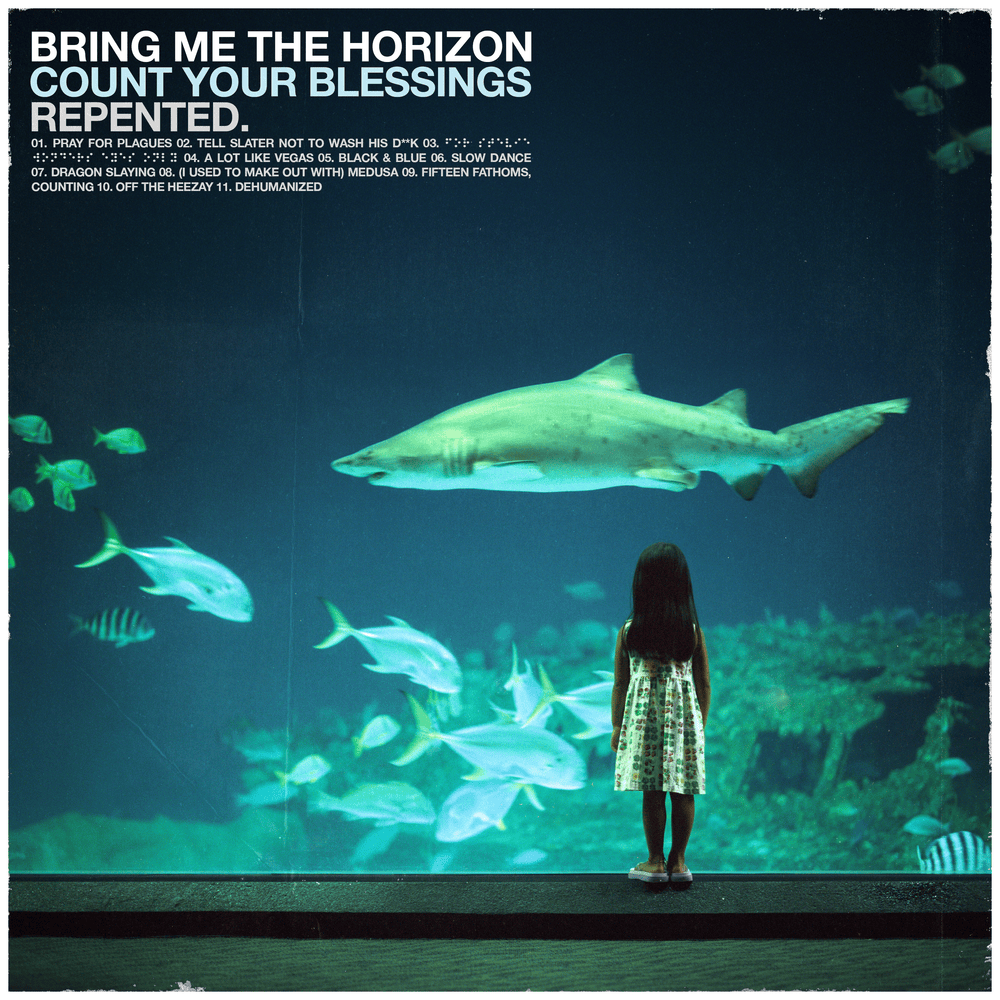
Curiosity and apprehension are common reactions whenever bands revisit older material. Is there a fresh perspective behind the remaster, or is it simply a nostalgic cash grab with unplugged renditions and live performances sprinkled throughout? Count Your Blessings | Repented is far more than that — it’s an artistic vision finally realised, backed by nearly 20 years of history.
Bring Me The Horizon’s return to their deathcore roots has been a carefully orchestrated rollout, beginning with the announcement of an Outbreak Presents performance back in April and culminating in the reveal that they would revisit their debut album. For longtime fans, the nostalgia is impossible to ignore. Newer fans, however, many of whom were introduced through the POST HUMAN era, may wonder why Oli Sykes and company chose to return to the record that started it all. To answer that, a quick history lesson is in order.
Count Your Blessings was originally released on 30 October, 2006. For those unfamiliar with the band’s history, Bring Me The Horizon have openly expressed dissatisfaction with the original release. While its shock-value lyrics, raw production, and grimy MySpace-era aesthetic thrived during the mid-2000s, the album undeniably shows its age. Repented addresses many of those technical shortcomings, showcasing the band’s sonic maturity after two decades of growth.
Thankfully, the lyrics remain just as vulgar, chaotic and unapologetically deathcore as they were in 2006. Credit to the band for resisting the temptation to modernize the album’s identity, instead preserving it as a time capsule of where they began.
For newer fans, the journey into deathcore begins with ‘Pray for Plagues’, whose opening guitar assault benefits tremendously from the re-recording. Across the album, nearly every track receives a level of craftsmanship that elevates the original without sacrificing its intensity. The once-muddy wall of percussion is clearer, the double-tracked instrumentation has been reworked with greater precision and the interplay between the riffs, bass and drums feels significantly tighter. The improvements are especially noticeable on ‘Tell Slater Not to Wash His Dick’, ‘Black & Blue’ and ‘Dragon Slaying’.
The biggest overhaul comes from the guitar work. Lee Malia’s performance breathes new life into these songs, making them feel larger and more dynamic than ever before. One of the biggest points of online debate was whether Oli Sykes could still deliver these vocals. Thankfully, he not only proves that he still has the range, but also showcases just how much his technique has evolved over the years. Nowhere is that more evident than on ‘(I Used to Make Out With) Medusa’, where his guttural screams and subterranean growls sound downright demonic.
The lone new track, ‘Dehumanize’, is arguably the most brutal song on the record. Both lyrically and musically, it reflects nearly two decades of experience while putting many modern deathcore bands to shame. From its opening riffs, it immediately establishes itself as a contender for song of the year. Lyrically, the song draws a line between conviction and complacency, challenging listeners to stand for something rather than fade into the crowd. It captures a moment in history where humanity increasingly feels disconnected and desensitised to the world around us. The track features three absolutely devastating breakdowns, anchored by a repeating hook that lingers long after the song ends. The final breakdown builds into a wall-of-death anthem before crushing everything in its path with a single command: "Kill each other".
Count Your Blessings | Repented is the artistic director’s cut of Bring Me The Horizon’s debut – an ambitious vision finally realised nearly 20 years later. It’s a relentlessly brutal and unapologetically explicit listening experience that will have you two-stepping and windmilling wherever you are. New fans are getting the definitive way to experience this deathcore essential: a version that preserves the spirit of the 2000s while benefiting from vastly improved musicianship and production. Returning fans, meanwhile, are treated to the nostalgia trip they’ve always wanted, presented exactly as it should have been heard.
Now open up the pit, dust off your MySpace profile, fix your scene hair and welcome Bring Me The Horizon back to where it all began.