
THE HARA: The Fallout
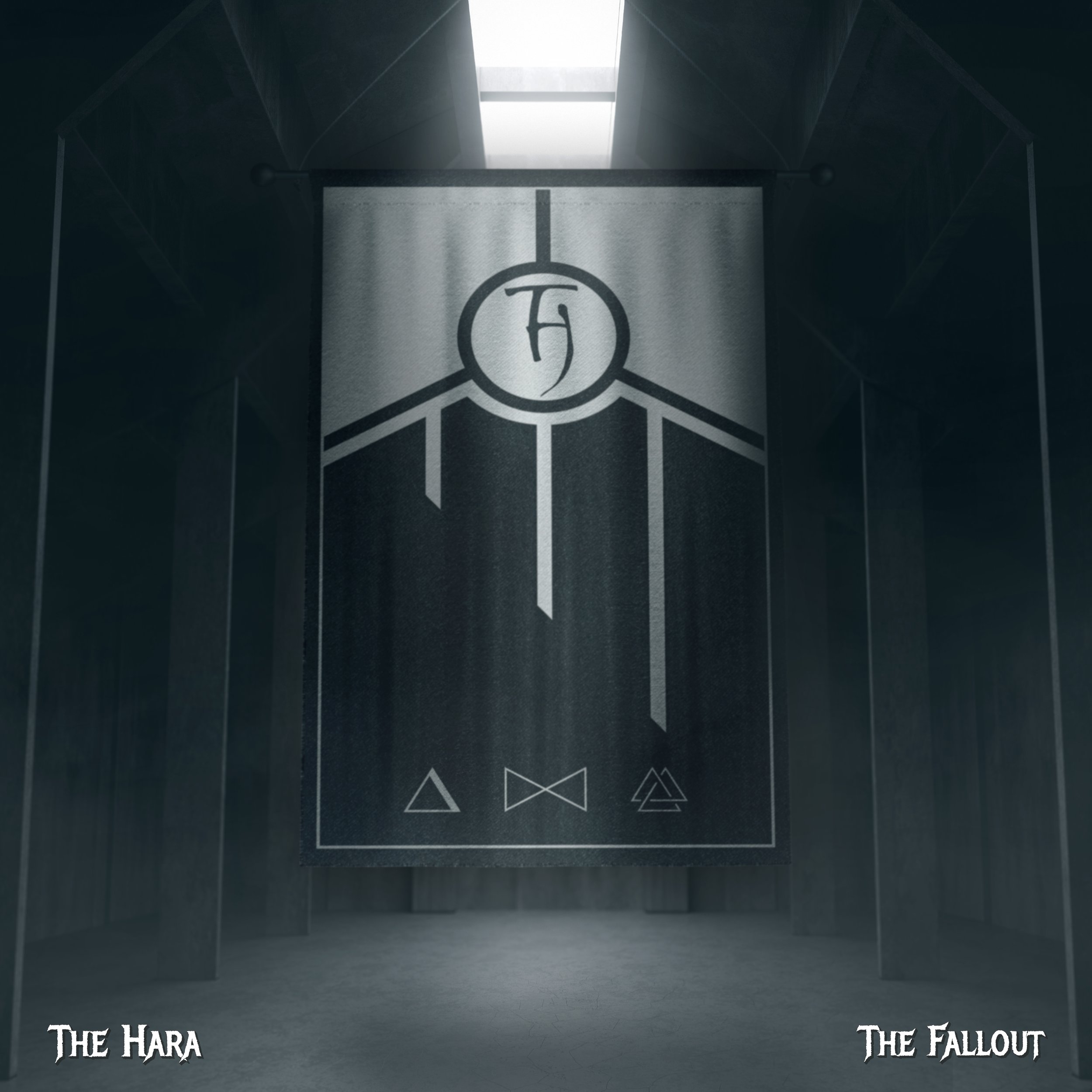
There’s a sense of controlled detonation running through ‘The Fallout’, the sound of THE HARA standing in the wreckage of everything they’ve survived and deciding to turn it into something louder and more confrontational. It’s an album forged in tension: between vulnerability and violence, melody and menace, introspection and catharsis. At its best, ‘The Fallout’ captures a band pushing past the limits of their earlier indie work, sharpening their industrial-leaning alt-rock into something emotionally exposed and direct. That said, the album’s commitment to atmosphere and intensity can occasionally come at the expense of contrast, with certain textures recurring so frequently they risk dulling the impact. Still, moments like the track featuring Bethany Curtis of As December Falls remind you why THE HARA command attention, when they lock into a song’s emotional core, the results are undeniable.
Opening track ‘Trophy’ doesn’t so much introduce ‘The Fallout’ as confront it head-on. Built on an industrial undercurrent and a bass line that stalks rather than grooves, the song establishes a hostile tone from the outset. THE HARA weaponises restraint here, letting verses simmer before detonating into a chorus that feels deliberately bitter rather than celebratory. ‘Trophy’ dissects the hollow validation of being elevated as proof of someone else’s success, praised and ultimately reduced to an object. While its message is sharp, the track’s reliance on familiar industrial tropes slightly tempers its shock value. Still, as an opening statement, it frames the album’s central conflict effectively: ‘The Fallout’ isn’t about winning, but about questioning what that victory costs.
‘Monsters and Demons’ pushes inward, trading outward defiance for something more psychological. The track coils around a pulsing rhythm, its electronic textures and distorted layers closing in like intrusive thoughts. Where ‘Trophy’ lashes out at expectation, this one interrogates the self, blurring the line between the monsters imposed on us and the demons we nurture. The chorus lands with bruised melodicism, though its impact is softened by the song’s predictable dynamic arc. Even so, it succeeds in articulating one of the album’s strongest themes: fallout doesn’t always arrive as an explosion, sometimes it lingers.
With ‘The System’, THE HARA shift their frustration from internal collapse to structural oppression. Driven by a mechanised groove, the song mirrors the forces it rails against, sounding cold and inescapable by design. It captures the exhaustion of fighting cycles of control, grounding its politics in lived frustration. However, the track’s commitment to its industrial pulse occasionally works against it, sacrificing momentum for mood. Despite this, ‘The System’ plays a crucial role in the album’s narrative, transforming personal burnout into collective indictment.
The album’s most combustible moment arrives with ‘Violence’ (ft. Bethany Curtis of As December Falls), a track that thrives on tension and contrast. Built on jagged riffs and a restless rhythm, it refuses to settle. Bethany Curtis’ contribution is more than a guest feature, her voice acts as a genuine counterweight and elevates the song’s emotional stakes. At times, the track threatens overload, but the friction is largely the point. ‘Violence’ becomes a dialogue, standing as one of ‘The Fallout’s most effective collaborations.
Closing track ‘Enemy’ pulls the album back from its most explosive tendencies, ending not with resolution, but with self-awareness. More restrained and atmospheric, the song allows its tension to breathe. Melodies linger rather than erupt, and the lyrics land with bruised honesty. As a closer, ‘Enemy’ feels intentional, a reminder that the most enduring battles begin once the noise fades.
As a complete body of work, ‘The Fallout’ is THE HARA’s most focused and emotionally direct album to date, even if its ambition occasionally outpaces its variation. Its commitment to intensity can cause tracks to blur together, but the record’s conviction remains its greatest strength. The ‘The Fallout’ doesn’t reinvent the band’s sound, but it refines it into something more honest and confrontational. Flawed but fearless, it’s an album that demands engagement and lingers after the final note.
THE HARA will take ‘The Fallout’ on the road in early 2026, embarking on an extensive UK tour. Highlights include London’s Camden Assembly on 22 January, Manchester’s Deaf Institute, Cardiff’s TramShed, Newcastle’s The Cluny, and a run of Scottish dates culminating in Edinburgh’s Legends on 22 March. Tickets are available now.